
Outpatient knee replacement is a type of knee surgery where the patient goes home the same day instead of staying in the hospital. This option is possible because of advances in surgical care, anesthesia, pain control, and careful patient selection. It is used for people with severe knee arthritis who have not improved with non-surgical treatments.
How Common It Is and Who Gets It? (Epidemiology)
Knee replacement has become more common over the years, and many people of different ages choose the surgery. Both older adults and a growing number of younger adults have the procedure. Outpatient knee replacement is offered more often now because surgical techniques and safety methods have improved.
Why It Happens – Causes (Etiology and Pathophysiology)
Knee arthritis is the main reason people need knee replacement. The smooth joint surface wears down, causing pain, swelling, stiffness, and trouble walking. When nonsurgical treatments no longer help, knee replacement removes the worn surfaces and replaces them with artificial parts to improve movement.
How the Body Part Normally Works? (Relevant Anatomy)
The knee joint is formed where the thigh bone, shin bone, and kneecap meet. Healthy cartilage allows these bones to glide smoothly. When cartilage wears away, the bones rub together and cause pain. Knee replacement restores a smooth surface so the knee can bend and straighten more easily.
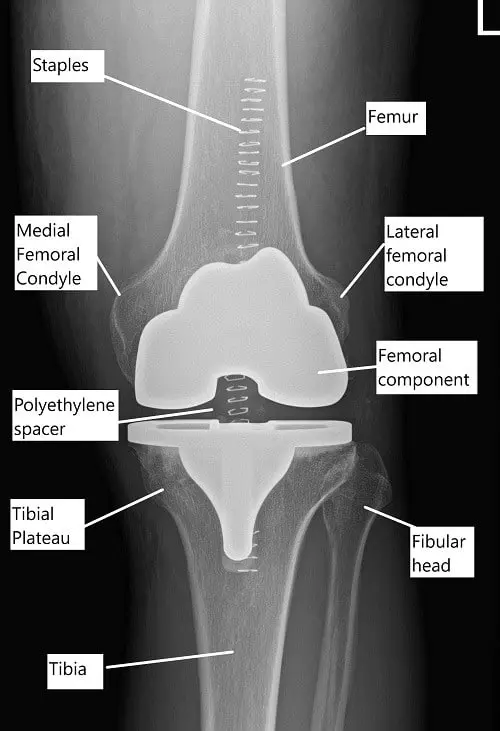
Postoperative X-ray showing a total knee replacement.
What You Might Feel – Symptoms (Clinical Presentation)
People with severe knee arthritis often feel pain, swelling, stiffness, grinding, trouble walking, and difficulty with stairs. Some notice changes in leg alignment or increased fatigue with activity.
How Doctors Find the Problem? (Diagnosis and Imaging)
Diagnosis includes a review of symptoms, a physical exam, and imaging tests. X-rays show how much cartilage has worn away and whether the bones touch each other. This information helps determine if knee replacement is needed and whether outpatient surgery is safe.
Classification
Knee arthritis may be described by severity. Outpatient knee replacement is best for people without major medical problems, with good home support, and with a safe environment for recovery. Patients with severe deformity, major health issues, or poor support systems may need hospital-based surgery.
Other Problems That Can Feel Similar (Differential Diagnosis)
Conditions that can cause similar pain include tendon irritation, bursitis, ligament injuries, meniscus tears, and referred pain from the hip or back. A careful exam and imaging help separate these from arthritis that needs surgery.
Treatment Options
Non-Surgical Care
Before surgery, people may try rest, therapy, weight control, braces, and anti-inflammatory medicines. Other options include injections or activity changes.
Surgical Care
Outpatient knee replacement follows the same steps as traditional surgery. After preparation and anesthesia, the surgeon removes the worn surfaces and places the artificial implants. The surgery uses techniques that reduce bleeding and improve pain control. After surgery, the patient is monitored and discharged once walking safely with support and meeting all safety checks.
How is Outpatient Knee Replacement Performed?
The procedure for outpatient knee replacement is similar to traditional knee replacement but with a few key differences to facilitate a quicker discharge. Here’s an overview of the process:
Preoperative Preparation: Patients undergo thorough preoperative assessments to ensure they are suitable candidates for outpatient surgery. This includes evaluating their overall health, home environment, and support system.
Anesthesia: Regional anesthesia, such as a spinal or epidural block, is commonly used to minimize pain and reduce the need for general anesthesia, which can prolong recovery.
Surgical Technique: The surgeon performs the knee replacement using minimally invasive techniques, which involve smaller incisions and less tissue damage. This approach helps reduce pain and speed up recovery.
Postoperative Care: After the surgery, patients are closely monitored in a recovery area. Pain management is a priority, and patients are encouraged to start moving their knee as soon as possible.
Discharge: Once the patient meets specific criteria, such as stable vital signs, adequate pain control, and the ability to walk with assistance, they are discharged home with detailed instructions for home care and follow-up appointments.
Recovery and What to Expect After Treatment
The first days focus on pain control and gentle movement. A nurse and therapist may visit at home to help with exercises, wound care, and safety. Early therapy is important to improve motion and strength. Follow-up visits check healing. Many people return to light activities within weeks, but full recovery may take several months.
Benefits of Outpatient Knee Replacement
Several benefits are associated with outpatient knee replacement:
Faster Recovery: Patients can start their recovery in the comfort of their own home, which can lead to a quicker return to normal activities.
Lower Risk of Infection: Spending less time in the hospital reduces the risk of hospital-acquired infections.
Cost-Effective: Outpatient procedures can be more cost-effective for both patients and healthcare providers due to the reduced need for hospital resources.
Patient Satisfaction: Many patients prefer recovering at home, which can enhance their overall satisfaction and comfort.
Outpatient knee replacement surgery offers several advantages for the right candidates. The outpatient surgery can minimize the risk of the postoperative surgical site/wound infection. In a hospital setting, the patient may potentially be vulnerable to catch a resistant infection from another patient or a healthcare provider.
The patients report greater satisfaction while being at home after surgery. The home environment is reassuring to the patient and the movement in a familiar environment promotes an early return to activities. The patients also report greater participation in therapy and exercises in the comfort of their own homes.
The outpatient surgeries are also associated with a decrease in the cost of the procedure and reduce the burden on the healthcare system while not compromising with the care of the patient. The patients are constantly monitored after the surgery and are allowed to walk with support the same day.
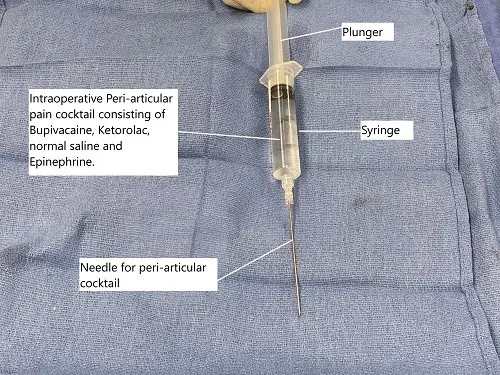
Intraoperative cocktail for peri-articular injection used for pain control after the surgery.
The patients are thoroughly instructed before they can sit in a car to go home. At home, a trained nurse and a therapist monitor the patient’s progress. At any step should the need arise, the patient may be admitted to the hospital. The nurse constantly takes care of the operative dressing.
Some patients may not feel comfortable going home the same day of the surgery and they are supported in their decision to stay at the hospital. Hospital stay offers the patient the advantage of constant monitoring and the ability to manage any complications should they arise.
With the success of knee replacement surgeries, a large number of young patients may today opt for an outpatient knee replacement surgery that may be performed in a hospital or an ambulatory surgical center. Speak with your surgeon regarding the best options should you require knee replacement surgery.
Possible Risks or Side Effects (Complications)
Risks include infection, stiffness, bleeding, and difficulty managing pain at home. Some patients may need to return to the hospital if problems arise. People with major health problems, smoking history, high body weight, or depression or anxiety may not be good candidates for outpatient surgery.
Long-Term Outlook (Prognosis)
Most people do well after knee replacement, with improved comfort and movement. Outpatient knee replacement offers the same long-term results as inpatient surgery when patients are carefully selected and follow their recovery plan.
Out-of-Pocket Cost
Medicare
CPT Code 27447 – Outpatient total knee replacement: $303.02
Medicare generally covers most of the approved amount for this surgery, but you are still responsible for a portion. Supplemental insurance plans such as Medigap, AARP, or Blue Cross Blue Shield usually cover the remaining twenty percent that Medicare does not pay. These plans are built to close the coverage gap, so when the surgery is Medicare-approved, patients often end up owing nothing further.
If you also carry secondary insurance through an employer plan, TRICARE, or the Veterans Health Administration, it acts as the next payer after Medicare. Once your deductible is met, the secondary insurance may cover the rest, including coinsurance. Many of these policies have their own deductible, usually between $100 and $300 depending on the plan rules and whether the service is in-network.
Workers’ Compensation
If your outpatient knee replacement is required because of a work-related injury, Workers’ Compensation covers the full cost of the surgery and all related care. There are no out-of-pocket expenses.
No-Fault Insurance
If your knee condition was caused by a motor vehicle accident, No-Fault Insurance pays the full cost of the outpatient knee replacement. You may only have a small deductible depending on your policy.
Example
A patient named Linda needed an outpatient knee replacement for advanced joint wear. Her estimated Medicare portion was $303.02. Because Linda also had secondary insurance, the remaining share was covered, leaving her with no out-of-pocket cost.
Frequently Asked Questions (FAQ)
Q. How can I go home the same day?
A. You can go home when your pain is controlled, your vital signs are stable, and you can walk safely with support.
Q. Is it safe?
A. It is safe for carefully selected patients who meet strict medical and home-support requirements.
Q. Does outpatient surgery hurt more?
A. Pain is managed with modern medications, injections, and therapy. Many people feel comfortable recovering at home.
Q. When can I return to work?
A. Many people return to light activities in a few weeks. Timing depends on your job and recovery.
Q. What if I feel unsure about going home?
A. You can stay in the hospital if you do not feel comfortable leaving. Your care team supports your decision.
Summary and Takeaway
Outpatient knee replacement allows the patient to go home the same day of surgery. It can offer faster recovery, fewer hospital-based risks, and a comfortable home environment. Not everyone is a candidate, and careful evaluation is required. The long-term results are the same as traditional inpatient surgery when the procedure is done on the right patient with proper support.
Clinical Insight & Recent Findings
A recent study examining more than 600,000 hip and knee replacements in New York State showed a sharp rise in outpatient joint replacement, particularly in ambulatory surgery centers, with outcomes similar to inpatient surgery when patients were carefully selected .
The study found that healthier, younger, privately insured patients were most likely to undergo same-day discharge procedures, while those who were older, had multiple medical conditions, or were publicly insured were less often offered outpatient surgery—reinforcing that outpatient knee replacement is safest when performed on well-screened candidates with strong home support.
These findings support the discussion above, where outpatient knee replacement offers faster recovery, lower infection risk, and high satisfaction but must be reserved for individuals who meet strict medical and environmental criteria to ensure safe recovery at home. (“Study of outpatient joint replacement trends – see PubMed.“)
Who Performs This Treatment? (Specialists and Team Involved)
Orthopedic surgeons perform outpatient knee replacement with support from anesthesiologists, pain specialists, nurses, and physical therapists. This team works together to prepare the patient and manage care after surgery.
When to See a Specialist?
You should see a specialist when knee pain interferes with daily activities or continues despite nonsurgical treatments. A surgeon can explain whether outpatient surgery is an option.
When to Go to the Emergency Room?
Seek emergency care if you have sudden severe pain, swelling, or redness, a high fever, or trouble walking. These may be signs of infection or other complications.
What Recovery Really Looks Like?
Recovery involves home-based therapy, regular walking with support, and gradual improvement in knee strength. Soreness and swelling are normal early in the process. Many people feel more comfortable recovering in their own home.
What Happens If You Ignore It?
Ignoring severe arthritis can lead to more stiffness, worsening pain, and decreased mobility. Daily activities may become harder, and waiting too long can limit the success of treatment.
How to Prevent It?
Healthy habits such as weight control, regular low-impact exercise, and early treatment for knee injuries can reduce stress on the knee and protect the joint.
Nutrition and Bone or Joint Health
A balanced diet with protein, calcium, and vitamin D supports joint and bone health. Good hydration also helps your body recover after surgery.
Activity and Lifestyle Modifications
Low-impact activities like walking, cycling, and swimming help maintain knee strength. Avoiding high-impact sports, heavy lifting, and sudden twisting movements helps protect the new joint and supports long-term success.
Do you have more questions?
How do I know if I’m a good candidate for outpatient knee replacement?
A thorough evaluation by your surgeon will determine your suitability. This includes assessing your overall health, medical history, support system at home, and motivation to follow postoperative care instructions.
How long does the outpatient knee replacement surgery take?
The surgery itself usually takes about 1 to 2 hours, but you will spend additional time in the recovery area to ensure you are stable before going home.
What should I do to prepare my home for recovery after outpatient knee replacement?
Prepare your home by arranging a comfortable recovery area, removing tripping hazards, stocking up on groceries and medications, and ensuring you have easy access to essentials like the bathroom and kitchen.
Will I need someone to stay with me after the surgery?
Yes, it’s important to have someone stay with you for at least the first 24 to 48 hours after surgery to assist with daily activities and ensure your safety.
How will pain be managed after outpatient knee replacement?
Pain is managed through a combination of medications, including opioids, anti-inflammatories, and local anesthetics. Your surgeon will provide a detailed pain management plan tailored to your needs.
What are the potential risks and complications of outpatient knee replacement?
Risks include infection, blood clots, implant issues, and complications related to anesthesia. Your surgeon will discuss these risks with you and take steps to minimize them.
How soon can I start physical therapy after surgery?
Physical therapy typically begins the same day or the day after surgery. Early mobilization is crucial for a successful recovery.
When can I expect to return to work after outpatient knee replacement?
This depends on the nature of your job. Many patients can return to light, sedentary work within 2 to 4 weeks. More physically demanding jobs may require 6 to 12 weeks of recovery.
What kind of follow-up care will I need after the surgery?
Follow-up care includes regular visits to your surgeon to monitor healing, physical therapy sessions, and possibly additional imaging studies to ensure the implant is functioning properly.
Can both knees be replaced at the same time in an outpatient setting?
Bilateral knee replacement (both knees) is typically not done on an outpatient basis due to the increased complexity and longer recovery period required.
What should I do if I experience severe pain or complications at home?
If you experience severe pain, excessive swelling, redness, or other concerning symptoms, contact your surgeon immediately. In an emergency, seek medical attention right away.
How long will I need to use assistive devices like crutches or a walker?
Most patients use assistive devices for a few weeks after surgery. The exact duration will depend on your progress and your physical therapist’s recommendations.
Will I need to make any dietary changes after the surgery?
While there are no specific dietary restrictions, maintaining a balanced diet rich in protein, vitamins, and minerals can support healing. Staying hydrated is also important.
Are there any activities I should avoid during recovery?
Avoid high-impact activities and movements that strain your knee, such as running, jumping, and heavy lifting, until your surgeon gives you the green light.
How will outpatient knee replacement affect my daily routine in the long term?
Most patients can return to their normal daily routine with improved mobility and reduced pain. Long-term restrictions are minimal, but high-impact activities may be discouraged.
What is the success rate of outpatient knee replacement?
The success rate is high, with most patients experiencing significant pain relief and improved function. Complication rates are low when proper protocols are followed.
Can I travel after my outpatient knee replacement surgery?
Travel is generally discouraged in the initial weeks post-surgery due to the risk of blood clots and the need for regular follow-up care. Consult your surgeon for specific advice.
How can I reduce the risk of blood clots after surgery?
Your surgeon may prescribe blood thinners, and you’ll be encouraged to move around and do gentle exercises to improve circulation. Wearing compression stockings can also help.
What role does my family or caregiver play in my recovery?
Your family or caregiver can assist with daily tasks, help you with exercises, monitor your condition, and provide emotional support throughout your recovery.
Will I need to make modifications to my car for driving after surgery?
You should not drive until your surgeon clears you, typically a few weeks post-surgery. No specific car modifications are usually needed, but ease of getting in and out of the car should be considered.
Are there any special exercises I should do before the surgery to prepare?
Preoperative exercises, often called “prehab,” can strengthen your muscles and improve your overall fitness, which may aid in a smoother recovery. Your surgeon or physical therapist can provide specific exercises.
How will outpatient knee replacement impact my sleep?
Initially, you may experience some discomfort that can affect sleep. Using pillows to support your knee and following your pain management plan can help improve sleep quality.
What advancements have made outpatient knee replacement possible?
Advances in surgical techniques, anesthesia, pain management, and postoperative care have all contributed to making outpatient knee replacement a viable and safe option.
How do I maintain the results of my knee replacement long term?
Maintaining a healthy weight, staying active with low-impact exercises, following your physical therapy program, and attending regular check-ups with your surgeon will help preserve the benefits of your knee replacement