
If knee discomfort becomes intense enough to interfere with daily routines or is joined by swelling, sensitivity, or redness, it’s crucial to obtain medical help.
At Complete Orthopedics, our proficient knee physicians are experts in managing knee discomfort through surgical and non-surgical approaches. We assess symptoms, pinpoint the issue, and recommend appropriate treatments, including surgery if needed.
We serve New York City and Long Island and collaborate with six hospitals, providing leading-edge knee surgery and extensive orthopedic services. You can schedule a consultation with our orthopedic surgeons online or via phone.
Explore common reasons for knee pain and the available treatment options, including when opting for surgery is most recommended.
Overview
Knee replacement surgeries are life-changing surgeries as they allow the patients to get back to the activities they enjoy without the fear of pain or disability. Thousands of knee replacement surgeries are performed each year and with the advancement in techniques and implants, the knee replacements today last for 20 years and more.
Rehabilitation following knee replacement surgery forms a critical part of recovery. The majority of the patients are able to go home three days after the surgery or even earlier depending upon their recovery and the type of surgery. Once the patients are home, there are certain precautions they need to take and exercises they need to do to maximize the benefits of the surgery and prevent any potential complications.
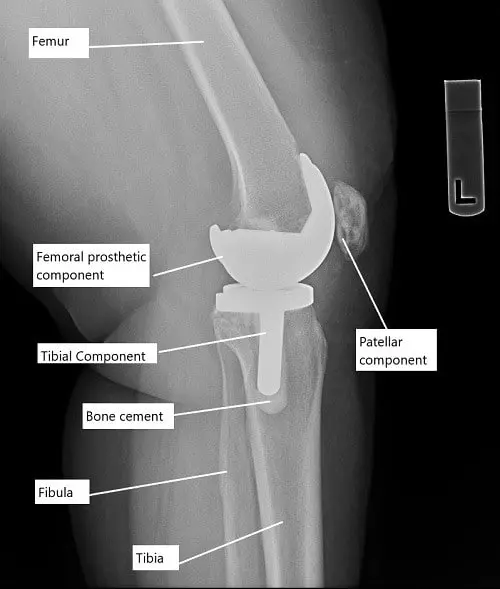
X-ray showing total knee replacement.
Key Points
- Early Mobilization: It is essential to start moving as soon as possible after surgery. This can help reduce complications like blood clots and promote faster recovery.
- Physical Therapy: Participating in a structured physical therapy program is vital. Physical therapists can guide you through exercises that improve flexibility, strength, and overall knee function.
- Pain Management: Managing pain effectively is crucial for rehabilitation. This might involve medications prescribed by your doctor, along with ice packs and elevation of the knee.
- Assistive Devices: Using assistive devices such as crutches, walkers, or canes initially can help you move around safely and gradually transition to walking without support.
- Infection Prevention: Infections can occur after knee replacement surgery, and preventing them is critical. This includes proper wound care and possibly taking antibiotics as prescribed.
- Blood Clot Prevention: Blood clots are a risk after surgery. Doctors may prescribe blood thinners and recommend exercises to keep blood flowing.
- Recognizing Complications: Knowing the signs of potential complications, such as increased pain, swelling, redness, or fever, is important. Seek medical attention if these occur.
- Preoperative Education: Understanding what to expect before, during, and after surgery can significantly improve outcomes. This includes knowing the potential risks and benefits of knee replacement.
- Postoperative Instructions: Clear, detailed instructions on postoperative care, including activity restrictions, pain management, and signs of complications, are essential for recovery.
- Support Systems: Having a support system in place, such as family, friends, or caregivers, can help you adhere to recovery protocols and manage daily activities during the initial recovery phase.
Do’s after knee replacement
- Elevate the involved limb when lying down to relieve swelling after the surgery. Elevation just above the heart level helps in improving circulation.
- Exercises such as ankle pumps and quadriceps exercises are linked with decreased risk of deep vein thrombosis and potential stiffness of the knee.
- Use icing to reduce swelling and inflammation after the surgery. Icing helps in the reduction of pain and swelling, as cold temperature leads to narrowing of the blood vessels of the leg. This in turn leads to a reduction in edema.
- Walking is encouraged the next day of the surgery and in some cases, the same day of the surgery. Regular walking with support helps in the reduction of edema and stiffness. Walking also improves circulation and prevents deep vein thrombosis.
- Using adequate support while walking and performing exercise is important to prevent any inadvertent injury. Proper use of a walker or a cane is necessary to prevent any falls.
- A healthy diet rich in fibers and liquids is important to prevent any constipation after the surgery. Constipation may occur as a result of general anesthesia used for surgery. Obese and overweight patients should try to follow a diet plan under the supervision of their primary physician to reduce their weight.
- Follow the instructions of the surgeon for care of the operative wound. Report promptly any signs of surgical site infection such as redness, excessive swelling, discharge from incision, and fever.
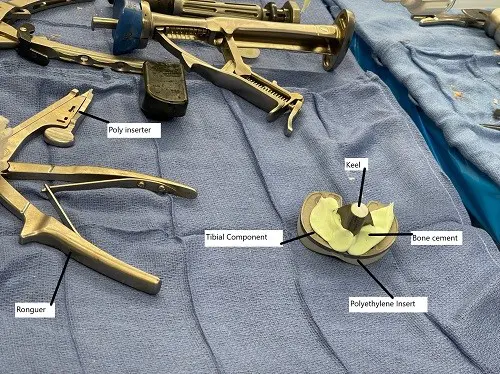
Intraoperative image showing cementing of the tibial component.
- Patients are advised not to ignore knee pain after the surgery. While some pain is normal following the surgery and usually decreases in intensity in the following weeks, excessive pain may be associated with knee replacement complications such as deep vein thrombosis, implant breakage, fracture, tendon rupture, ligaments rupture, prosthetic infection, etc. While muscle soreness is common after exercises, any exercise pain associated with the exercises should be brought to the physician’s notice.
- Make your home environment safer by removing any potential objects/furniture that may cause you to trip while at home. Patients are advised to make extra space for movement at home by removing unwanted stuff. Patients are also advised to remove any loose wires or any small items that may cause them to trip and fall.
- Patients are also advised to install equipment to prevent any inadvertent accidents. Equipment may include bath mats, handrails in the bathtub and toilet seat, nightlights, texture to slippery floors, etc.
- To ease the rehabilitation process at home, patients are advised to move their sleeping quarters to the first floor to avoid stairs during the initial recovery period.
- Patients are advised to keep their essential items within reach in case they live alone and also have quick access to phones in case they need help.
Don’ts after a knee replacement
- Don’t perform any activity that involves twisting or significant force during the initial postoperative period.
- Follow the advice of the physician regarding wound care and don’t allow the incision area to be constantly wet or soiled. Report any discharge or redness to your physician.
- While exercise is important, don’t push yourself to bend or straighten that is accompanied by pain. Rather increase your exercise capacity gradually under the supervision of your therapist.
- Even after weeks/months of knee replacement surgery, don’t engage in high-impact activities/sports. Surgeons generally advise against running/jogging activity.
- Patients may require narcotic medications to control the initial postoperative pain. Patients are advised to avoid driving while on narcotic medications.
- Don’t ignore the pain and swelling out of proportion to the usual postoperative symptoms. These may be signs of serious complications such as deep vein thrombosis.
Knee replacement surgeries are highly successful surgeries and a coordinated rehabilitation with the surgeon and the therapist ensures an early return to baseline activity. Speak with your physician before and after the surgery to clear any questions and concerns.
Summary
Recovering from knee replacement surgery involves a combination of physical therapy, proper pain management, and following specific dos and don’ts to ensure the best possible outcome. Early mobilization, maintaining an appropriate activity level, preventing complications, and utilizing available technology are all key components of a successful recovery. Regular follow-up appointments and patient education also play crucial roles in managing expectations and adhering to recovery protocols. By following these guidelines, you can enhance your recovery process and achieve a better quality of life with your new knee.
¿Tienes más preguntas?
How soon can I start walking after knee replacement surgery?
Most patients can start walking with the help of assistive devices like crutches or walkers within a day or two after surgery. It’s important to follow your surgeon’s and physical therapist’s instructions to ensure you are moving safely.
How long will I need to use assistive devices like crutches or a walker?
The duration varies from patient to patient, but typically, assistive devices are used for about 2-4 weeks, or until you can walk safely and comfortably without them.
What signs of complications should I be aware of after knee replacement surgery?
Look out for increased pain, redness, swelling, warmth around the knee, fever, or unusual discharge from the wound. Contact your healthcare provider if you experience any of these symptoms.
How often should I attend physical therapy sessions?
Frequency varies based on individual progress, but typically, physical therapy sessions are scheduled 2-3 times a week for the first several weeks post-surgery.
Can I kneel on my knee after replacement surgery?
Kneeling can be uncomfortable after knee replacement. While it’s not harmful to the implant, it may be difficult due to discomfort. Discuss with your surgeon and physical therapist before attempting.
When can I return to work after knee replacement surgery?
This depends on the nature of your job. For sedentary jobs, you might return in 4-6 weeks. For physically demanding jobs, it could take 3 months or more.
Is it normal to hear noises from my knee after surgery?
Yes, it is common to hear clicking or clunking sounds from the knee, especially during the early stages of recovery. This usually decreases over time as the muscles strengthen.
What activities should I avoid after knee replacement surgery?
Avoid high-impact activities such as running, jumping, or contact sports. Stick to low-impact activities like walking, swimming, and cycling
How long does it take for the swelling to go down after knee replacement surgery?
Swelling can last for 3-6 months after surgery. Keeping your leg elevated, using ice, and wearing compression stockings can help reduce swelling.
Can I sleep on my side after knee replacement surgery?
Yes, you can sleep on your side. Placing a pillow between your knees can help make you more comfortable.
How important is it to follow my surgeon’s postoperative instructions?
Following your surgeon’s instructions is crucial for a successful recovery and to avoid complications. It ensures you are progressing safely through each stage of recovery.
Can I take a bath or go swimming after knee replacement surgery?
You should avoid submerging your knee in water until your surgeon confirms that your incision is fully healed, usually around 4-6 weeks post-surgery.
Will I need a second knee replacement in the future?
While knee replacements are designed to last many years, some patients may need a revision surgery if the implant wears out or if complications arise.
How can I maintain the longevity of my knee replacement?
Maintaining a healthy weight, staying active with low-impact exercises, and following your surgeon’s recommendations can help prolong the life of your knee replacement.
Are there any medications I should avoid after knee replacement surgery?
Avoid medications that increase bleeding risk, such as certain nonsteroidal anti-inflammatory drugs (NSAIDs) or blood thinners, unless prescribed by your doctor.
What can I do to prevent blood clots after knee replacement surgery?
Follow your surgeon’s recommendations, which may include taking prescribed blood thinners, doing leg exercises, and wearing compression stockings to keep blood flowing.
Can I travel after knee replacement surgery?
It is generally advised to avoid long trips for the first few months. If you must travel, take frequent breaks to walk and stretch to prevent blood clots.
How long will I need to continue physical therapy exercises at home?
Continuing home exercises for several months after completing formal physical therapy sessions is recommended to maintain strength and flexibility.
What should I do if I fall after knee replacement surgery?
If you fall, contact your healthcare provider immediately, even if you don’t feel immediate pain. Falls can damage the new joint or other parts of your leg.
Is it normal to feel tired after knee replacement surgery?
Yes, feeling tired is normal due to the body’s healing process. Ensure you get plenty of rest and follow a balanced diet to support recovery.
Can I resume sexual activity after knee replacement surgery?
Yes, you can resume sexual activity once you feel comfortable, typically around 4-6 weeks post-surgery. Discuss any concerns with your surgeon for specific advice.