
Knee viscosupplementation is a non-surgical treatment used to ease pain from knee arthritis. In this procedure, a gel-like fluid made from hyaluronic acid is injected into the knee joint. This fluid helps the knee move more smoothly and reduces friction that causes pain. It is often recommended when knee pain begins to limit daily activities and other treatments have not provided enough relief.
How Common It Is and Who Gets It? (Epidemiology)
Knee viscosupplementation is commonly used for adults with mild to moderate knee arthritis. People who are not ready for surgery, or who want to delay surgery, often choose this treatment. It is more common in older adults, but younger people with early arthritis may benefit as well.
Why It Happens – Causes (Etiology and Pathophysiology)
Knee arthritis develops as the smooth cartilage in the joint wears down. As this happens, the natural joint fluid becomes thinner and less effective at lubricating the knee. This leads to friction, swelling, stiffness, and pain. Viscosupplementation helps by improving the quality of this fluid.
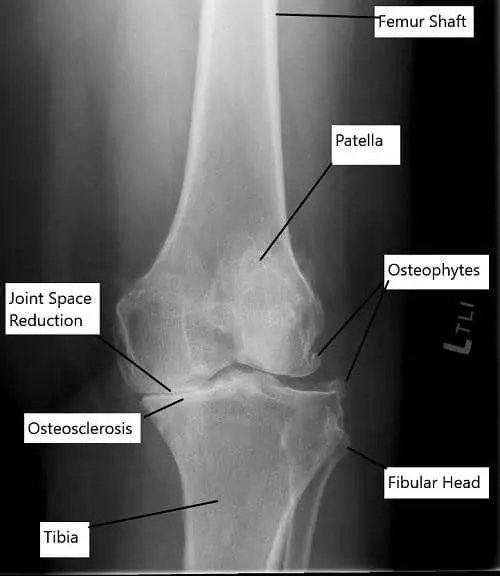
X-ray showing osteoarthritis of the knee.
Understanding Knee Osteoarthritis
Before delving into how viscosupplementation works, let’s understand knee osteoarthritis. Think of your knee joint as a well-oiled machine, where smooth cartilage allows bones to glide over each other effortlessly. With osteoarthritis, this cartilage wears away, leading to friction between bones, inflammation, and pain.
How Does Viscosupplementation Work?
Hyaluronic acid, the key ingredient in viscosupplementation, is a naturally occurring substance found in the synovial fluid that lubricates our joints. When injected into the knee, it acts as a lubricant and shock absorber, reducing friction between bones and providing relief from pain.
How the Body Part Normally Works? (Relevant Anatomy)
The knee joint functions like a hinge that allows bending and straightening. It has cartilage that cushions the bones and synovial fluid that keeps everything moving smoothly. When cartilage becomes worn and the fluid becomes thinner, the joint becomes painful and stiff.
What You Might Feel – Symptoms (Clinical Presentation)
People who may benefit from viscosupplementation often experience knee pain, stiffness, swelling, grinding, and difficulty walking or climbing stairs. Pain may worsen with activity and improve with rest.
How Doctors Find the Problem? (Diagnosis and Imaging)
A diagnosis is made through a physical exam, review of symptoms, and imaging studies. X-rays are most often used to look for joint space narrowing or bone changes seen in arthritis.
Classification
Knee arthritis is usually classified by severity, ranging from early thinning of cartilage to advanced bone-on-bone changes. Viscosupplementation tends to work best in the early or moderate stages before the cartilage is completely worn away.
Other Problems That Can Feel Similar (Differential Diagnosis)
Symptoms of knee arthritis can overlap with:
- Tendon irritation
- Bursitis
- Meniscus injuries
- Ligament sprains
A careful exam helps rule out these other issues.
Treatment Options
Non-Surgical Care
Treatments may include rest, activity changes, physical therapy, weight management, braces, oral anti-inflammatory medicines, corticosteroid injections, and viscosupplementation injections.
Surgical Care
If non-surgical care does not help, surgery may be considered. Options can include cartilage procedures or knee replacement, depending on the severity of arthritis.
The Procedure
Viscosupplementation is typically performed as an outpatient procedure in a doctor’s office or clinic. The process involves cleansing the knee area and injecting the hyaluronic acid gel directly into the joint using a thin needle. While some patients may experience mild discomfort during the injection, the procedure is generally well-tolerated.
Knee Viscosupplementation Benefits
There are several options for the non-operative treatment of knee osteoarthritis, including intra-articular knee injections. Corticosteroid knee injections will reduce the inflammation within the joint, improving osteoarthritis pain temporarily. However, once the steroid wears off, the inflammation will eventually recur and the knee pain will return.
Another treatment option given by injection is viscosupplementation. This is an injection of hyaluronic acid – a key component of normal synovial fluid. This injection comes in single-dose or triple-dose versions, and can improve the viscosity of the synovial fluid. This allows the knee to bend more smoothly without any catching or grinding – this is of most benefit in the early stages of arthritis before full thickness cartilage wear has occurred.
Recovery and What to Expect After Treatment
Most people can return to normal activities the same day, but strenuous exercise should be avoided for a few days. Some people feel relief right after the injection, while others need several weeks to notice improvement. Your doctor may also give knee-strengthening exercises to support recovery.
Possible Risks or Side Effects (Complications)
Risks are low but may include temporary soreness, swelling, or warmth at the injection site. Rarely, an allergic reaction to the hyaluronic acid may occur. It may not help people with advanced arthritis.
Long-Term Outlook (Prognosis)
Many patients experience longer-lasting relief compared with steroid injections. The treatment works best when the arthritis is not too advanced. People with severe cartilage loss may not benefit as much and may need other treatments.
Out-of-Pocket Cost
Medicare
CPT Code 20610 – Knee viscosupplementation injection: $15.12
Medicare typically pays most of the approved amount for this type of joint injection, leaving a small portion for the patient. Supplemental insurance plans such as Medigap, AARP, or Blue Cross Blue Shield generally take care of the remaining twenty percent that Medicare does not pay. These supplemental policies are designed to close that gap, so patients rarely face additional charges when the injection is a Medicare-covered service.
If you also have secondary insurance through an employer plan, TRICARE, or the Veterans Health Administration, it steps in after Medicare. Once any deductible is met, these secondary plans may cover the remaining balance. Some secondary policies include a deductible that usually falls between $100 and $300 depending on the plan details and network rules.
Workers’ Compensation
If your need for knee viscosupplementation comes from a work-related injury, Workers’ Compensation covers the entire cost of the injection and any related care. There are no out-of-pocket charges to you.
No-Fault Insurance
If the knee condition is tied to a motor vehicle accident, No-Fault Insurance pays for the full procedure. You may only see a small deductible depending on your individual policy.
Example
A patient named John received knee viscosupplementation for persistent knee pain. Medicare estimated his portion at $15.12. Because John carried secondary insurance, that plan covered the remaining percentage, leaving him with no cost at all.
Frequently Asked Questions (FAQ)
Q. Will the injection hurt?
A. Most people feel only mild pressure or brief discomfort during the injection.
Q. How long does relief last?
A. Some people feel better for several months, but results vary from person to person.
Q. Can I drive after the injection?
A. Most people can drive the same day unless instructed otherwise.
Q. When can I return to work?
A. Many return the same day, but jobs that require heavy activity may require a short rest period.
Q. Is this the same as a steroid injection?
A. No. Steroid injections reduce inflammation, while viscosupplementation improves joint lubrication.
Summary and Takeaway
Viscosupplementation is a simple, low-risk injection that helps improve joint lubrication and reduce knee pain from early or moderate arthritis. It can delay the need for surgery and improve daily comfort for many patients.
Clinical Insight & Recent Findings
A recent study developed expert-driven guidelines for how to properly design clinical trials evaluating knee viscosupplementation, emphasizing that high-quality evidence requires well-defined patient selection, double-blind methods, and the use of imaging and biological markers to assess how hyaluronic acid may influence the progression of osteoarthritis .
These findings align with the purpose of knee viscosupplementation described above, where the goal is to restore lubrication in an arthritic joint and potentially reduce pain and stiffness for patients who are good candidates. The study noted that viscosupplementation has demonstrated symptomatic benefit in selected patients, but determining whether it slows structural degeneration requires standardized imaging, long-term follow-up, and careful trial design.
This supports why clinicians tailor viscosupplementation to appropriate stages of osteoarthritis and why patient outcomes can vary depending on joint condition, technique, and disease severity. (“Study on viscosupplementation guidelines – see PubMed.“)
Who Performs This Treatment? (Specialists and Team Involved)
Orthopedic surgeons, sports medicine doctors, and trained physician assistants commonly perform viscosupplementation injections. These clinicians evaluate the knee, confirm the diagnosis, and safely administer the injection.
When to See a Specialist?
You should see a specialist if knee pain limits daily activities, keeps returning, or does not improve with basic care like rest, ice, or over-the-counter pain relievers.
When to Go to the Emergency Room?
Emergency care is needed if you develop sudden severe swelling, fever with knee pain, inability to move the knee, or if the knee becomes very red and warm after an injection.
What Recovery Really Looks Like?
Most people notice mild soreness for a short time after the injection. Relief may begin right away or take several weeks. Daily movement becomes easier, and stiffness often decreases.
What Happens If You Ignore It?
Ignoring worsening arthritis can lead to increased pain, stiffness, and reduced mobility. Over time, this can make treatment less effective and may lead to the need for surgery.
How to Prevent It?
Staying active, avoiding extra strain on the knee, wearing supportive shoes, and following a treatment plan can help protect the joint and reduce flare-ups.
Nutrition and Bone or Joint Health
Eating a balanced diet with enough calcium, vitamin D, and lean protein helps support bone and joint health. Staying hydrated also helps joint fluid function properly.
Activity and Lifestyle Modifications
Gentle exercises such as walking, cycling, or swimming help keep the knee flexible and strong. Avoiding high-impact activities and maintaining a healthy weight can ease pressure on the joint and support long-term comfort.
¿Tienes más preguntas?
How long does it take for the effects of viscosupplementation to wear off if it doesn’t provide relief?
If viscosupplementation does not provide significant relief from knee osteoarthritis symptoms, the effects typically wear off within a few months after the final injection. Your orthopedic surgeon can discuss alternative treatment options if viscosupplementation is not effective for you.
Can viscosupplementation be used to treat knee pain caused by conditions other than osteoarthritis?
Viscosupplementation is primarily indicated for knee osteoarthritis, but it may also be considered as a treatment option for other conditions that cause knee pain, such as rheumatoid arthritis or traumatic injury. Your orthopedic surgeon can evaluate your specific condition and determine if viscosupplementation is appropriate for you.
How does the cost of viscosupplementation compare to other treatments for knee osteoarthritis?
The cost of viscosupplementation varies depending on factors such as the type of hyaluronic acid used, the number of injections required, and your insurance coverage. While viscosupplementation may have a higher upfront cost compared to corticosteroid injections, some individuals find it to be a cost-effective long-term solution due to its prolonged effects and potential reduction in the need for surgery.
Can viscosupplementation be used as a preventive measure for knee osteoarthritis?
While viscosupplementation is primarily used to treat existing knee osteoarthritis, some research suggests that it may have a role in preventing further cartilage damage and delaying the progression of osteoarthritis. However, more studies are needed to determine its efficacy as a preventive measure.
Are there any alternative treatments to viscosupplementation for knee osteoarthritis?
Yes, alternative treatments for knee osteoarthritis include oral medications, physical therapy, corticosteroid injections, platelet-rich plasma (PRP) therapy, and surgical interventions such as knee replacement. Your orthopedic surgeon can help determine the most appropriate treatment approach based on your individual needs and preferences.
What is viscosupplementation made of?
Viscosupplementation is made of hyaluronic acid and its derivative called Hyalgan. These are viscous substances which mimic the joint fluid and are very similar to the joint fluid that is present in the body. They are injected to restore the joint fluid and its characteristics so as to allow the joint to move smoothly.
How long do hyaluronic acid fillers last?
Hyaluronic acid fillers usually last more than six months. Some patients do not need to have another shot of hyaluronic acid filler until they are symptomatic again.
What are different types of knee injections?
There are multiple varieties of commercial knee injections, gel injections available in the market which include Hyalgan, Synvisc, Gel-One, Supartz, Orthovisc, Euflexxa, Monovisc. They differ in their molecular weight but are almost similar in mechanism of action and result. Specific hyaluronic acid injections are usually covered by Medicare.
What is the rooster comb shot?
A rooster comb shot is another name for viscosupplementation as hyaluronic acid is found in high concentration in the comb of the rooster and is traditionally related to it.
What are the side effects of Synvisc?
Side effects of Synvisc include pain, swelling, allergic reaction with the injection. If the injection is wrongly put into the soft tissue rather than the joint, then it may cause localized swelling and worsening of the pain.
Is hyaluronic acid a steroid?
Hyaluronic acid injections are not steroid injections. Though they have anti-inflammatory characteristics like steroids, they usually do not have the detrimental side effects of steroids. There is minimal systemic absorption and effects.
Why is cortisone shot bad for you?
Cortisone injections if given every three month or more usually do not have much detrimental effects on the joint as well as the body. If they are given at a more frequent interval, then they may cause side effects. At the same time even a single shot of cortisone injection may cause some worsening of pain, swelling and due to its systemic effect, may cause fluctuation in sugar level especially in diabetic patients. If given too frequently, they may have other systemic effects like elevation of blood pressure, osteoporosis, and vitamin D deficiency.
How many times can you get a cortisone shot?
A person can get cortisone shot almost every 3 months until the time that they get decreasing relief, decreasing period of relief with the cortisone injection for less than two to three months.
Who is a good candidate for viscosupplementation injection?
Patients who are allergic or unwilling to get cortisone injections or who are no longer relieved with cortisone injections and have pain due to arthritis are good candidates for viscosupplement injections. Patients with early arthritis are also good candidates for viscosupplementation.
Can viscosupplementation be alternative for people looking to avoid surgery?
Patients who are trying to avoid surgeries due to various reasons can try viscosupplementation to improve their symptoms and avoid or delay the surgery. If these patients are in an advanced disease stage, then these injections may not be helpful.
What happens after a cortisone or a viscosupplementation injection?
After the injection, the patient may have worsening of pain and swelling in the knee for the next two to three days. They are advised to use anti inflammatory medication along with elevation and ice to decrease the worsening of the symptoms. After about two to three days, the injection starts providing pain relief which may take up to a week and give good pain relief.
Can steroid shots make you gain weight?
Single steroid shot usually does not have much systemic resorption to cause systemic effects like weight gain, but if cortisone shots are given too frequently, then they may cause weight gain.
Can you take ibuprofen after getting a cortisone shot?
Patients are advised to take anti-inflammatory medications like Aleve or Advil if they can tolerate after the cortisone injection to avoid worsening and decrease the pain and swelling due to the disease as there is a cortisone injection.
What type of doctors give the cortisone shot?
Cortisone shot can be given by a primary care physician or a sports physician or an orthopedic surgeon, rheumatologist, as well as Sports Medicine physician.
What are the experiences of stem cell or PRP injections for joint regeneration?
PRP injection is more commonly used nowadays clinically and have shown promising results lasting a few months. If the patient is unwilling to take cortisone injection or is allergic to cortisone, they can have PRP injections for pain relief.
Can a cortisone shot help a torn meniscus?
A cortisone shot in a scenario of torn meniscus can help decrease pain and swelling. It though will not cause healing of the meniscus. At the same time, if a meniscal repair surgery is being contemplated in the near future, then the patient should avoid taking cortisone injection as it may impair healing of the meniscus.