
Total hip replacement (THR), also called total hip arthroplasty, is a highly effective surgery performed to alleviate pain and restore mobility in patients suffering from severe hip joint conditions. These conditions, including arthritis, fractures, and other degenerative diseases, can limit daily activities like walking, sitting, or standing. Total hip replacement is a well-established procedure, offering excellent results with pain relief and improved joint function.
How Common It Is and Who Gets It? (Epidemiology)
Hip replacement surgery is one of the most successful operations in modern medicine. Over 450,000 total hip replacements are performed each year in the United States alone. Most patients are between 50 and 80 years old, with osteoarthritis being the leading cause. However, patients of all ages, including those with hip fractures or avascular necrosis, may also benefit from this procedure.
Why It Happens – Causes (Etiology and Pathophysiology)
The most common causes of hip joint degeneration include:
- Osteoarthritis: Age-related wear and tear of cartilage.
- Rheumatoid arthritis: An autoimmune disease causing joint inflammation.
- Avascular necrosis: The death of bone tissue due to reduced blood supply, often caused by trauma or medication.
- Post-traumatic arthritis: Arthritis following a hip injury or fracture.
The result of these conditions is damage to the hip joint’s cartilage, leading to bone-on-bone contact, which causes pain and restricts movement.
How the Body Part Normally Works? (Relevant Anatomy)
The hip joint is a ball-and-socket joint:
- The ball is the femoral head at the top of the femur (thighbone).
- The socket is the acetabulum, a part of the pelvic bone.
- Both the ball and socket are lined with smooth articular cartilage that helps reduce friction during movement. Ligaments and muscles surrounding the joint provide stability and mobility.
Hip Replacement Surgery Materials And Equipment
Depending on the type of hip replacement you will receive, the equipment and instruments used will differ in terms of their exact specifications, but broadly speaking the materials consist of a stem for the femur, an artificial femoral head that affixes to the stem, an acetabular component which may also require bone screws and the acetabular liner – usually made of a special type of plastic called polyethylene.
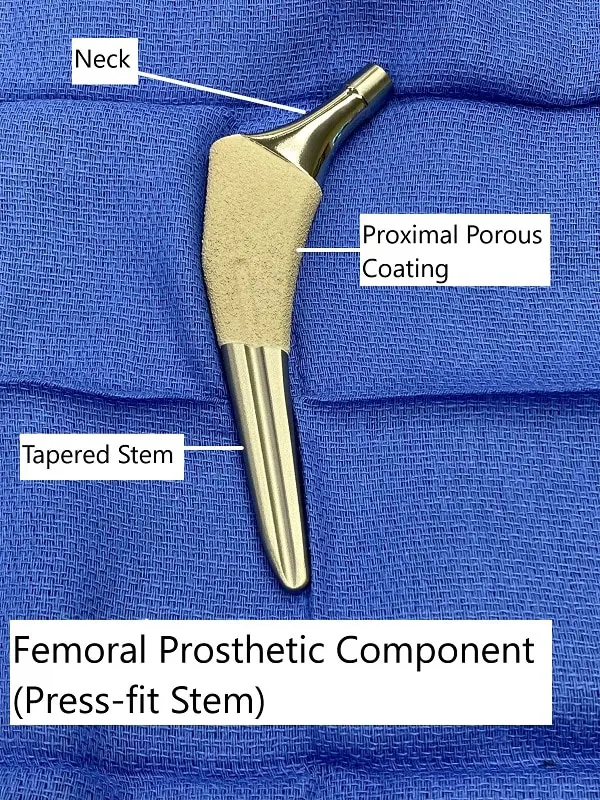
Femoral Prosthetic Component
Your procedure may or may not require the use of a fluoroscopic imaging unit and will also require special retractors that allow the surgeon to visualize the hip joint as well as trial components of the aforementioned to ensure that the appropriate size component is used at the time of implanting the definitive prosthesis.
What You Might Feel – Symptoms (Clinical Presentation)
Common symptoms indicating the need for hip replacement surgery include:
- Severe hip pain during everyday activities such as walking or sitting.
- Stiffness that makes it difficult to bend or move the leg.
- Pain at rest, especially at night.
- Loss of mobility, making it challenging to perform basic tasks like putting on shoes or getting in and out of a car.
How Doctors Find the Problem? (Diagnosis and Imaging)
Diagnosis typically involves:
- Physical examination: Assessing joint mobility and strength.
- X-rays: Showing the degree of arthritis or joint damage.
- MRI or CT scans: Providing detailed images of bone and soft tissue.
- Bone scans: Sometimes used to assess the extent of damage.
Procedure Types or Techniques (Classification)
There are various techniques for hip replacement surgery, such as:
- Cemented vs. Cementless: Some implants are secured using bone cement, while others rely on bone growth.
- Minimally invasive surgery: Uses smaller incisions for quicker recovery.
- Anterior vs. Posterior approaches: The surgeon accesses the joint through the front (anterior) or the back (posterior) of the hip.
Other Problems That Can Feel Similar (Differential Diagnosis)
- Trochanteric bursitis: Inflammation of the bursa on the outside of the hip.
- Sciatica: Pain radiating from the lower back to the hip and leg.
- Hip labral tear: Damage to the cartilage around the hip socket.
- Osteonecrosis: Bone death due to a lack of blood supply.
Treatment Options
- Conservative treatments: Medications, physical therapy, and joint injections.
- Surgical treatment: If conservative methods fail, hip replacement surgery is typically recommended.
Recovery and What to Expect After Surgery
- Hospital Stay: Most patients stay in the hospital for 1-3 days.
- Pain Management: A combination of medications and therapies is used to control pain.
- Physical Therapy: Begins immediately after surgery to improve mobility and strength.
- Full recovery: Most patients recover within 3-6 months, although full recovery may take longer in some cases.
Possible Risks or Side Effects (Complications)
- Infection: Can occur at the incision site or around the prosthesis.
- Blood clots: DVT or pulmonary embolism can occur.
- Dislocation: The prosthetic hip may dislocate if not properly aligned.
- Leg length discrepancy: The length of the legs may be slightly different after surgery.
- Implant loosening: Over time, the implant may become loose, requiring revision surgery.
Long-Term Outlook (Prognosis)
With proper care and follow-up, hip replacement implants can last for 15-20 years or more. Many patients experience significant pain relief and improved function, allowing them to return to normal activities.
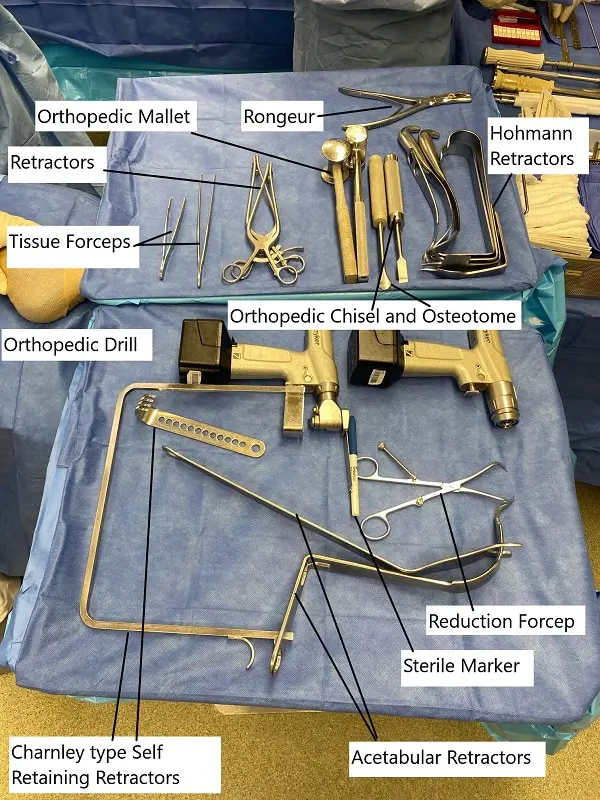
Hip replacement instruments
Out-of-Pocket Costs
Medicare
CPT Code 27130 – Primary Total Hip Arthroplasty (Replacement of Both Acetabulum and Femoral Head): $303.45
CPT Code 27132 – Conversion to Total Hip Arthroplasty (Conversion of Prior Hip Surgery to Total Hip): $394.09
CPT Code 27134 – Revision THA (Both Components, Acetabular and Femoral): $448.00
CPT Code 27137 – Revision THA (Acetabular Component Only): $345.69
CPT Code 27138 – Revision THA (Femoral Component Only): $359.01
CPT Code 27125 – Hemiarthroplasty (Partial Hip Replacement, Replacement of Femoral Head Only): $268.14
Medicare Part B typically covers 80% of the approved cost for these procedures once your annual deductible has been met, leaving you responsible for the remaining 20%. Supplemental Insurance plans such as Medigap, AARP, or Blue Cross Blue Shield generally cover that remaining 20%, minimizing or eliminating out-of-pocket expenses for Medicare-approved surgeries. These plans coordinate with Medicare to fill the coverage gap and reduce patient costs.
If you have Secondary Insurance, such as TRICARE, an Employer-Based Plan, or Veterans Health Administration coverage, it serves as a secondary payer. These plans generally cover any remaining balance, including coinsurance or small deductibles, which typically range from $100 to $300, depending on your plan and provider network.
Workers’ Compensation
If your hip replacement or revision surgery is required due to a work-related injury, Workers’ Compensation will cover all associated medical expenses, including surgery, rehabilitation, and follow-up care. You will not have any out-of-pocket expenses, as the employer’s insurance carrier directly covers all approved treatments.
No-Fault Insurance
If your hip surgery is needed due to an automobile accident, No-Fault Insurance will typically cover the full cost of treatment, including surgery and postoperative care. The only potential out-of-pocket cost may be a small deductible or co-payment depending on your insurance policy.
Example
Thomas Johnson required a primary total hip arthroplasty (CPT 27130) due to arthritis, with an estimated Medicare out-of-pocket cost of $303.45. Later, he required a revision of both components (CPT 27134) with an estimated out-of-pocket cost of $448.00. Since Thomas had supplemental insurance through Blue Cross Blue Shield, both amounts were fully covered, leaving him with no out-of-pocket expenses for the procedures.
Frequently Asked Questions (FAQ)
Q. How long will my new hip last?
A. Implants typically last 15-20 years, but some may last longer with proper care.
Q. Can I run after hip replacement?
A. High-impact activities like running are discouraged. Low-impact activities like walking, swimming, and cycling are ideal.
Summary and Takeaway
Total hip replacement is a highly effective procedure for individuals suffering from hip pain and mobility issues due to arthritis or other joint conditions. The surgery can significantly improve quality of life by reducing pain and increasing mobility.
Clinical Insight & Recent Findings
A recent study examined the effectiveness of prehabilitation programs for older patients awaiting total hip replacement (THR).
The study found that while preoperative exercises and education (AktivA®) improved gait speed and quality of life in the short term, it did not significantly affect postoperative outcomes such as gait speed or other performance-based tests at 3, 6, or 12 months after surgery.
However, both the intervention and control groups showed significant improvements in gait speed, with participants reaching values close to Western reference standards. The results suggest that while prehabilitation may not improve post-surgery functional outcomes, THR itself significantly enhances mobility. (“Study on prehabilitation for older patients awaiting THR – see PubMed.”)
Who Performs This Surgery? (Specialists and Team Involved)
Orthopedic surgeons specializing in joint replacements typically perform total hip replacement surgeries, supported by anesthesiologists, nurses, and physical therapists.
When to See a Specialist?
If hip pain is interfering with daily life and conservative treatments have failed, consult an orthopedic surgeon for a thorough evaluation.
When to Go to the Emergency Room?
Seek emergency care if you experience severe pain, swelling, or signs of infection, such as redness or fever, after surgery.
What Recovery Really Looks Like?
Most patients can begin walking with assistance the day after surgery. Full recovery can take up to 6 months, with significant improvements in the first few months.
What Happens If You Delay Surgery?
Delaying surgery may result in further joint damage, increased pain, and complications that could make the procedure more difficult.
How to Prevent Recurrence or Failure?
Maintain a healthy weight, avoid high-impact activities, and follow your surgeon’s recommendations to ensure the longevity of the implant.
Nutrition and Bone or Joint Health
A balanced diet rich in calcium and vitamin D is essential for bone health during the recovery period.
Activity and Lifestyle Modifications
Engage in low-impact activities and avoid excessive weight-bearing or high-impact sports to preserve the health of your new hip.
Q: Who is a good candidate for hip replacement surgery?
A: It’s usually recommended for elderly patients, but advancements allow for younger patients to undergo surgery if needed.
Q: What does the hip replacement surgery procedure involve?
A: The procedure involves removing the arthritic femoral head and socket, replacing them with implants, and ensuring proper implant orientation for stability and leg length symmetry.
Q: What is the success rate of hip replacement surgery?
A: The success rate is high, with studies showing rates above 95%, typically around 97 to 98%.
Q: What are the risks of hip replacement surgery?
A: Risks include heart attack, blood clots, stroke, infection, neurovascular injury, dislocation, leg length discrepancy, and persistent pain.
Q: What is the recovery timeframe for hip replacement surgery?
A: Most patients achieve almost complete recovery by three months post-surgery.
Q: What exercises are recommended after hip replacement surgery?
A: Exercises typically include straight leg raises, clamshell raises, and wall squats, among others recommended by a physical therapist.
Q: What is the cost of hip replacement surgery?
A: The cost varies significantly based on the surgical approach, equipment used, and specific patient conditions requiring special implants.
Do you have more questions?
What are the different types of materials used in total hip replacements, and how do they differ in terms of durability and performance?
Total hip replacements can be made of various materials, including metal, ceramic, and plastic. Each material has its advantages and considerations in terms of durability, wear resistance, and compatibility with the patient’s anatomy.
What is the expected recovery time after total hip replacement surgery, and when can patients return to normal activities?
Recovery time after total hip replacement surgery varies depending on individual factors such as age, overall health, and adherence to rehabilitation protocols. Most patients can return to normal activities within a few weeks to months after surgery.
Can total hip replacement surgery be performed using minimally invasive techniques, and what are the potential benefits of such approaches?
Yes, total hip replacement surgery can be performed using minimally invasive techniques, which may result in smaller incisions, less tissue damage, reduced pain, faster recovery, and shorter hospital stays compared to traditional open surgery.
How does age affect the decision to undergo total hip replacement surgery, and are there any age restrictions for the procedure?
Age is a consideration in the decision-making process for total hip replacement surgery, but there are no strict age restrictions. The decision is based on factors such as the patient’s overall health, functional status, and the severity of hip joint disease.
What preoperative tests or evaluations are required before undergoing total hip replacement surgery?
Preoperative tests and evaluations before total hip replacement surgery may include blood tests, imaging studies (X-rays, MRI), electrocardiogram (ECG), and assessments of overall health and fitness for surgery.
Can individuals with certain medical conditions, such as diabetes or heart disease, still undergo total hip replacement surgery?
Yes, individuals with certain medical conditions can undergo total hip replacement surgery, but their medical status will be carefully evaluated to optimize safety and minimize risks during the procedure.
How long does the artificial hip joint typically last, and are there factors that can affect its longevity?
The longevity of the artificial hip joint varies depending on factors such as patient age, activity level, implant type, and surgical technique. While many hip replacements last 15-20 years or more, some may need revision surgery sooner.
What activities should be avoided after total hip replacement surgery to prevent complications or implant wear?
After total hip replacement surgery, patients should avoid high-impact activities, heavy lifting, and movements that involve extreme or repetitive stress on the hip joint to prevent complications or premature implant wear.
Can total hip replacement surgery relieve all symptoms of hip pain and dysfunction, or are there limitations to its effectiveness?
Total hip replacement surgery can significantly alleviate symptoms of hip pain and dysfunction in most cases, but it may not completely eliminate all symptoms, especially if there are underlying issues such as nerve damage or muscle weakness.
What type of anesthesia is used for total hip replacement surgery, and how is pain managed during and after the procedure?
Total hip replacement surgery is commonly performed under general anesthesia or regional anesthesia (such as spinal or epidural anesthesia). Pain during and after the procedure is managed with a combination of medications, including local anesthetics, opioids, and nonsteroidal anti-inflammatory drugs (NSAIDs).
Can individuals with a history of hip surgeries or hip trauma still undergo total hip replacement surgery, or are there contraindications?
Individuals with a history of hip surgeries or hip trauma may still be candidates for total hip replacement surgery, depending on the extent of previous interventions, residual hip function, and the presence of any complicating factors.
What are the potential complications associated with anesthesia during total hip replacement surgery, and how are they managed?
Complications of anesthesia during total hip replacement surgery may include allergic reactions, respiratory issues, blood pressure changes, and adverse drug interactions. Anesthesia is carefully monitored by anesthesiologists, and appropriate interventions are implemented to manage any complications that arise.
How does total hip replacement surgery affect mobility and independence in daily activities, especially in older adults?
Total hip replacement surgery can significantly improve mobility and independence in daily activities for older adults by reducing pain, increasing joint function, and restoring quality of life.
What are the dietary recommendations before and after total hip replacement surgery to promote healing and recovery?
Before and after total hip replacement surgery, patients may be advised to follow a balanced diet rich in protein, vitamins, and minerals to support tissue healing, strengthen muscles, and promote overall health.
Can total hip replacement surgery be performed simultaneously on both hips, or is it typically staged?
Total hip replacement surgery can be performed simultaneously on both hips in select cases, but it is more commonly staged, with each hip undergoing surgery separately to minimize the risk of complications and optimize recovery.
Are there any specific exercises or physical therapy programs recommended before and after total hip replacement surgery to improve outcomes?
Yes, preoperative exercises and physical therapy programs may focus on strengthening muscles, improving joint flexibility, and optimizing overall fitness to enhance surgical outcomes and facilitate postoperative recovery.
What are the signs and symptoms of potential complications after total hip replacement surgery, and when should medical attention be sought?
Signs and symptoms of potential complications after total hip replacement surgery include increased pain, swelling, redness or warmth around the incision site, fever, chills, difficulty bearing weight, and changes in sensation or mobility. Medical attention should be sought promptly if any of these symptoms occur.
Can total hip replacement surgery be performed using robotic-assisted techniques, and what are the potential benefits of this approach?
Yes, total hip replacement surgery can be performed using robotic-assisted techniques, which may offer advantages such as improved accuracy, precision, and personalized implant placement, potentially leading to better outcomes and faster recovery for patients.
How does the experience and expertise of the surgeon impact the outcomes of total hip replacement surgery?
The experience and expertise of the surgeon play a significant role in the outcomes of total hip replacement surgery, with skilled surgeons often achieving better results in terms of implant longevity, functional improvement, and patient satisfaction.
Can total hip replacement surgery be performed in outpatient settings, or is it typically done in hospitals?
Total hip replacement surgery is usually performed in hospitals, where patients can receive comprehensive care, including preoperative evaluation, surgical intervention, anesthesia, postoperative monitoring, and rehabilitation services. However, some less complex cases may be suitable for outpatient or ambulatory surgery centers.

