
Simultaneous bilateral knee replacement is a surgery where both knees are replaced during one operation. It is used for people who have severe arthritis in both knees and no longer benefit from nonsurgical treatments. This approach can help patients regain mobility in both knees at the same time and may shorten the overall recovery period.
How Common It Is and Who Gets It? (Epidemiology)
Many adults have arthritis in both knees. Some eventually need knee replacement in both joints. A smaller number of these patients are candidates for simultaneous bilateral knee replacement. This option is most often recommended for younger, nonobese patients who do not have major heart, lung, or kidney conditions.
Why It Happens – Causes (Etiology and Pathophysiology)
Osteoarthritis is the main cause of knee pain requiring knee replacement. With arthritis, the smooth cartilage wears away, causing bone-on-bone contact, swelling, and stiffness. When both knees are affected and conservative care fails, replacing both knees may be discussed.
How the Body Part Normally Works? (Relevant Anatomy)
The knee joint includes the thigh bone, shin bone, and kneecap. Cartilage helps these bones glide smoothly. Ligaments provide stability, and muscles support movement. When cartilage wears down in both knees, pain and deformity make everyday activities hard.
What You Might Feel – Symptoms (Clinical Presentation)
People needing bilateral knee replacement often have pain, stiffness, swelling, trouble walking, and reduced motion in both knees. They may struggle with standing, climbing stairs, or daily tasks. Pain may be worse with activity and better with rest.
How Doctors Find the Problem? (Diagnosis and Imaging)
Diagnosis includes an exam, X-rays, and sometimes magnetic resonance imaging. These studies show the amount of cartilage loss and help identify whether both knees have severe arthritis. Doctors also review medical history to ensure the patient is safe for simultaneous surgery.
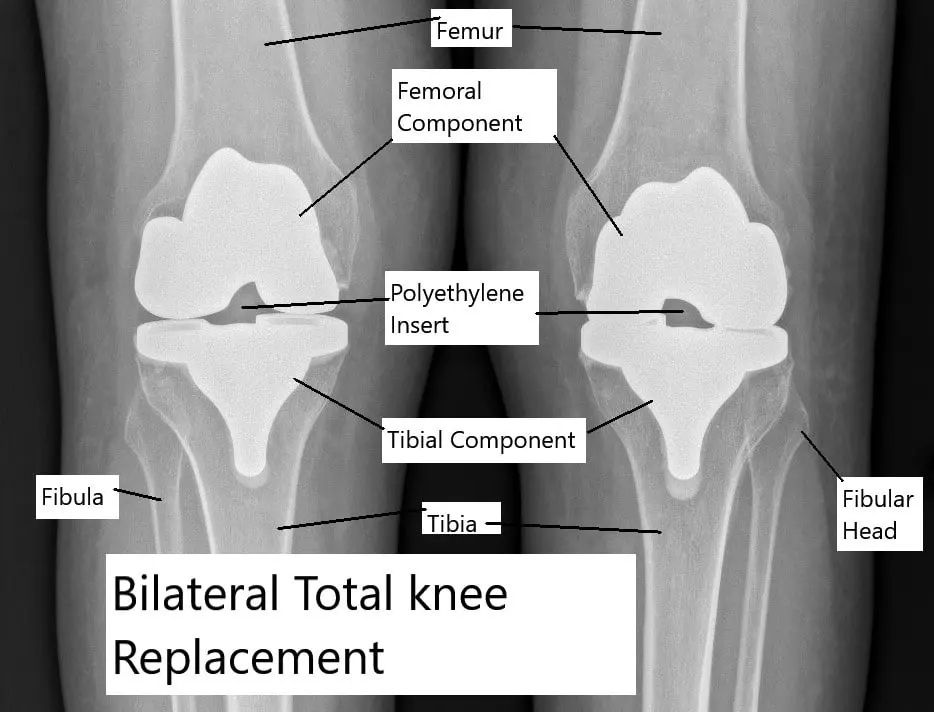
Total knee replacement of both knees.
Classification
Patients may fall into two groups:
• Those able to undergo simultaneous bilateral knee replacement.
• Those who require staged surgery, with each knee replaced at different times.
The decision depends on health status, age, body weight, and risks related to anesthesia.
Other Problems That Can Feel Similar (Differential Diagnosis)
Knee pain may also be caused by ligament injuries, meniscus tears, tendon irritation, bursitis, or referred pain from the hip or spine. These issues must be ruled out before choosing knee replacement.
Treatment Options
Non-Surgical Care
Before surgery, patients may try physical therapy, anti-inflammatory medicines, cortisone injections, and viscosupplementation. These options may help temporarily but do not stop arthritis from worsening.
Surgical Care
Simultaneous bilateral knee replacement replaces both knee joints during one surgery. Staged surgery replaces one knee first and the other knee months later. The implants may include cruciate retaining designs, which preserve the posterior cruciate ligament and require less bone cutting. The decision between simultaneous and staged surgery is made after reviewing risks, benefits, and patient preferences.
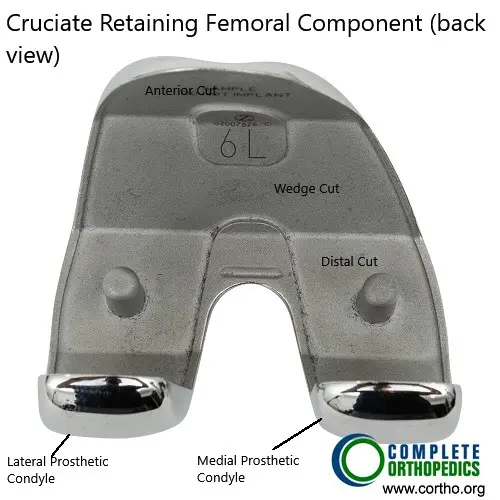
Cruciate retaining femoral component
The above images show cruciate retaining polyethylene insert and femoral component. The cruciate retaining design is ideal for patients with non inflammatory knee disease and a healthy posterior cruciate ligament. The cruciate retaining design involves less cutting of the bone but the exposure during surgery is less as compared to the posterior stabilized design.
Expert Opinions
Orthopedic surgeons emphasize the importance of individualized patient care plans. According to experts, the decision between SBTKR and StBTKR should be made collaboratively by the patient and their healthcare team, considering all medical, physical, and lifestyle factors.
Patient Experiences
Patients who have undergone SBTKR often report intense initial recovery periods but appreciate the simultaneous improvement in both knees once they recover. In contrast, patients opting for StBTKR may experience a less demanding initial recovery but must prepare for a second recovery period when the other knee is replaced.
Recovery and What to Expect After Treatment
Recovery may be more intense after simultaneous surgery because both knees heal at the same time. Patients may spend slightly longer in the hospital and often go to an inpatient rehabilitation center afterward. Therapy begins immediately and continues for months. In staged surgery, recovery happens twice but is easier each time because only one knee heals at once.
Possible Risks or Side Effects (Complications)
Simultaneous bilateral knee replacement has higher risks than replacing one knee at a time. Risks include increased blood loss, need for transfusion, blood clots, infections, and cardiopulmonary issues. Longer anesthesia time also increases risk. Inpatient rehabilitation may raise the chance of infection.
Long-Term Outlook (Prognosis)
Long-term outcomes for simultaneous and staged replacements are similar. Patients often experience better mobility, less stiffness, and improved quality of life. Many appreciate having both knees recover together, which can shorten overall recovery time.
Out-of-Pocket Cost
Medicare
CPT Code 27447 (performed twice) – Simultaneous bilateral total knee replacement: $606.04
Medicare pays most of the approved amount for each knee, but you are still responsible for a portion. Supplemental insurance plans such as Medigap, AARP, or Blue Cross Blue Shield typically cover the remaining twenty percent that Medicare does not pay. These plans are meant to close that gap, so when the procedures are Medicare-approved, patients often do not end up with any remaining balance.
If you also have secondary insurance through an employer plan, TRICARE, or the Veterans Health Administration, it becomes the next payer after Medicare. Once any deductible is satisfied, the secondary plan may cover the remaining balance, including coinsurance. Many secondary plans have their own deductible, usually between one hundred and three hundred dollars depending on the policy terms.
Workers’ Compensation
If your simultaneous bilateral knee replacement is needed because of a work-related injury, Workers’ Compensation covers the entire cost of both procedures and all related care. You will not have any out-of-pocket cost.
No-Fault Insurance
If your knee condition results from a motor vehicle accident, No-Fault Insurance covers the full cost of the bilateral surgery. The only possible charge would be a small deductible depending on your specific policy.
Example
A patient named Mark needed simultaneous bilateral total knee replacement for severe joint wear. His estimated Medicare amount was $606.04. Because he also had secondary insurance, the remaining portion was covered, leaving him with no out-of-pocket expenses.
Frequently Asked Questions (FAQ)
Q. Is simultaneous knee replacement safe?
A. It is safe for carefully selected patients but has higher risks than staged surgery.
Q. Who qualifies for simultaneous surgery?
A. Patients who are younger, nonobese, and without major heart, lung, or kidney disease.
Q. Is recovery harder with both knees replaced at once?
A. The early recovery is more challenging, but overall recovery time may be shorter.
Q. Do I stay in the hospital longer?
A. Yes, usually one to two extra days compared to a single knee replacement.
Q. Will therapy take longer?
A. Therapy is more demanding early on but happens only once instead of twice.
Summary and Takeaway
Simultaneous bilateral knee replacement treats severe arthritis in both knees during a single operation. It can shorten total recovery time and reduce the need for two separate hospital stays. However, it carries higher short-term risks and is offered only to healthy, well-prepared patients. Staged surgery remains a safer choice for many people. The decision should be based on a full evaluation and discussion with the surgeon.
Clinical Insight & Recent Findings
A recent study followed 268 patients scheduled for staged bilateral knee replacement and found that nearly one-fifth ultimately declined the second surgery, most often because the first knee had a slow or difficult recovery, while more than one-quarter experienced enough improvement in the unoperated knee that a second procedure was no longer needed .
Patients who cancelled showed significantly worse postoperative Oxford Knee Score gains and lower satisfaction, along with higher one-year complication rates, compared to those who completed both knees.
These findings align with the considerations described above for simultaneous bilateral knee replacement: recovery demands, medical fitness, and patient expectations strongly influence outcomes, and bilateral procedures—whether simultaneous or staged—require careful selection and counseling to balance risks, benefits, and long-term functional goals.
(“Study of bilateral knee replacement outcomes – see PubMed.”)
Who Performs This Treatment? (Specialists and Team Involved)
Orthopedic surgeons trained in joint replacement perform both simultaneous and staged knee replacements. The care team includes anesthesiologists, nurses, physical therapists, and rehabilitation specialists.
When to See a Specialist?
You should see a specialist when both knees have severe pain, stiffness, or limited mobility that no longer responds to medicines, therapy, or injections.
When to Go to the Emergency Room?
Seek emergency care if you experience sudden severe pain, chest pain, trouble breathing, fever, redness, or swelling after surgery.
What Recovery Really Looks Like?
Recovery involves walking with support, daily exercises, and gradual improvement. Early recovery is harder with simultaneous surgery because both knees must heal at once, but many patients appreciate finishing recovery in a single process.
What Happens If You Ignore It?
Untreated severe arthritis in both knees may lead to worsening pain, deformity, limited movement, and reduced daily function. Delaying care can also make surgery and recovery more difficult.
How to Prevent It?
Maintaining a healthy weight, staying active, avoiding high-impact activities, and treating knee injuries early may help slow arthritis progression.
Nutrition and Bone or Joint Health
A balanced diet with protein, vitamin D, and calcium supports bone health and healing. Good hydration also helps recovery.
Activity and Lifestyle Modifications
Low-impact activities such as walking, cycling, and swimming help maintain strength. Avoiding high-impact sports protects the joints and the implants. Therapy and safe home setup greatly support recovery.
Do you have more questions?
What makes a patient a good candidate for SBTKR?
Good candidates are generally those without significant health issues such as cardiovascular disease or diabetes, are non-obese, and have a strong support system at home for postoperative care.
What are the primary risks associated with SBTKR?
The primary risks include increased blood loss, higher chances of cardiovascular complications, and a longer and more intense recovery period immediately after surgery.
How long is the recovery period for SBTKR?
Recovery can vary but typically involves several weeks of intensive physical therapy and limited mobility, with total recovery spanning several months to a year.
Are there any age restrictions for undergoing SBTKR?
There are no strict age restrictions, but younger, healthier patients tend to recover more quickly and with fewer complications.
How does SBTKR compare to staged bilateral knee replacement in terms of cost?
SBTKR may be more cost-effective due to a single hospital stay and one period of rehabilitation, though this can be offset by higher immediate postoperative care costs.
Can SBTKR be performed on patients with significant health issues?
It is generally not recommended for patients with significant health issues due to the increased risk of complications.
What is the success rate of SBTKR?
Success rates are high, with most patients experiencing significant improvement in knee function and pain relief, though this varies based on individual health factors.
What type of anesthesia is used during SBTKR?
General anesthesia is commonly used, though some cases may use spinal or epidural anesthesia depending on the patient’s health status and preferences
How long does the actual SBTKR surgery take?
The surgery typically lasts several hours, depending on the complexity and the surgeon’s experience.
What is the postoperative pain management for SBTKR?
Pain management usually involves opioids, non-steroidal anti-inflammatory drugs (NSAIDs), and sometimes nerve blocks or local anesthesia techniques.
What is the postoperative pain management for SBTKR?
Pain management usually involves opioids, non-steroidal anti-inflammatory drugs (NSAIDs), and sometimes nerve blocks or local anesthesia techniques.
How soon after SBTKR can a patient walk?
Most patients are encouraged to start walking with assistance as soon as the day after surgery to promote circulation and muscle strength.
What kind of physical therapy is required after SBTKR?
Intensive physical therapy, starting from the day after surgery, is crucial. It initially focuses on regaining mobility and strength and progresses to more demanding exercises.
Are there any lifestyle changes needed after undergoing SBTKR?
Patients are advised to maintain a healthy weight, engage in regular non-impact exercises, and avoid activities that put excessive stress on the knees.
What follow-up care is required after SBTKR?
Regular follow-ups with the surgeon, routine X-rays, and check-ups with a physical therapist are necessary to monitor recovery and prosthesis integrity
Can a patient undergo SBTKR if they have had previous knee surgeries?
Yes, but previous surgeries and their impacts on the knee joint and surrounding tissues will be considered during the preoperative assessment.
What is the rate of infection for SBTKR?
The infection rate is low but is slightly higher compared to unilateral knee replacement due to the larger surgical area and longer operative time.
What are the signs of a complication after SBTKR?
Signs include excessive pain, redness, swelling, fever, or drainage from the incision sites, indicating the need for immediate medical attention.
Is there a difference in the quality of life after SBTKR compared to unilateral knee replacement?
Quality of life improvements are comparable to unilateral replacement but can be achieved faster as both knees are addressed at once.
How does weight impact the outcomes of SBTKR?
Higher body weight can negatively affect the outcomes by increasing the stress on the new joints and potentially leading to quicker wear or complications.
What advancements have been made in SBTKR techniques?
Recent advancements include improved prosthetic materials and design, better preoperative planning tools like 3D imaging, and enhanced surgical techniques that minimize tissue damage and improve alignment.
What dietary considerations should be taken post-SBTKR?
A balanced diet rich in calcium, vitamin D, and protein is important to support bone health and muscle recovery.
Can complications from SBTKR be corrected with further surgery?
Yes, most complications can be addressed with revision surgeries, though these are generally more complex and have their own risks.
How should a patient prepare their home for recovery after SBTKR?
Home preparation includes removing trip hazards, installing safety rails in the bathroom, and ensuring a comfortable resting area that minimizes the need to climb stairs.
Is there a recommended age to have SBTKR to ensure the best outcomes?
There’s no ideal age, but it’s typically recommended when knee pain and dysfunction significantly impair quality of life and conservative treatments have failed.