
Sciatica or lumbar radiculopathy is a common disabling condition that may affect people in all age groups. Sciatica symptoms usually include radiating pain in the buttocks down to the legs, feet, or toes. The symptoms may begin insidiously or after a traumatic injury or fall.
Sciatica is mainly diagnosed based on clinical examination. Radiological investigations may be needed if the initial symptoms get worse or if there is a neurological deficit.
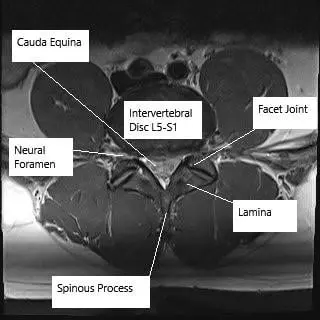
MRI image in axial section showing lumbar spine at the level of L5-S1.
Benefits of Chiropractic Care for Sciatica
Chiropractic care offers several benefits for individuals suffering from sciatica:
Non-Invasive Treatment: Chiropractic care is a non-surgical approach, making it an attractive option for patients seeking to avoid surgery.
Drug-Free Pain Relief: Chiropractic treatment does not involve the use of medications, which can be beneficial for patients who prefer or require a drug-free approach to pain management.
Improved Mobility: By addressing the underlying issues contributing to sciatica, chiropractic care can help restore mobility and function in the lower back and legs.
Holistic Approach: Chiropractors often take a holistic approach to treatment, addressing not only the symptoms but also the lifestyle and ergonomic factors that may contribute to sciatica.
Conservative measures are primarily used to treat sciatica without neurological deficits. The neurological deficits may include loss of sensation or numbness in the lower extremities or the saddle area (around the anus and genitals). There may be a weakness in the legs’ muscles, and patients may face difficulty walking or climbing stairs. Rarely there may be loss of control of bladder or bowel movements.
The conservative treatment may include activity modification, heat and cold therapy, physical therapy, pain medications, and alternative medicines such as chiropractic manipulation and acupuncture. Patients with neurological deficits may require surgical intervention in the form of lumbar decompression surgery, sometimes combined with lumbar fusion surgery.
The sciatic nerve is the largest nerve in the human body, formed by the L4, L5, S1, S2, and S3 nerve roots in the lower spine. The nerve roots may get compressed or irritated as they exit the vertebral column. The compression of the roots or the nerve may lead to the symptoms of sciatica.
A chiropractor utilizes spinal manipulation along with exercise techniques to relieve the symptoms of sciatica. Spinal manipulative therapy works under the principle to reduce the irritation of the nerves. The methods utilized by the chiropractic practitioner may involve the use of high-velocity thrusts to remove trigger points. They may also use gentle pressure to relax the muscles and thereby reduce the spasm.
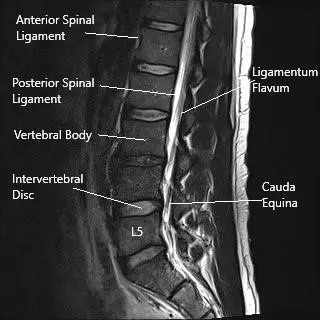
MRI image in sagittal section showing lumbar spine.
The mechanism of action of chiropractic spinal manipulation therapy has been hypothesized to be both mechanical and neurological. The biomechanical action of chiropractic manipulation reduces the mechanical stress on the nerve roots that may be irritated between the muscle fibers. The reduction in irritation leads to decreased inflammation and alleviation of symptoms.
The neurophysiological mechanism is hypothesized to act by affecting the nerve signals from the muscles surrounding the vertebral column (paraspinal muscles). Spinal manipulation therapy is also hypothesized to act via changing the perception of the pain.
The chiropractic practitioners’ deep pressure and manipulation are hypothesized to reduce inflammation-causing cells near the irritated nerve roots. The muscle fibers around the vertebral column go into spasm following irritating, and manipulation helps ease the spasm.
Besides the manipulation techniques, the chiropractors also utilize various exercises to increase flexibility and strengthen the vertebral column’s muscles. Other methods such as heat and cold therapy, massage, and TENS (transcutaneous electrical nerve stimulation) may be combined with the manipulation.
Chiropractic treatment is one of the various conservative management options. Many patients may benefit from chiropractic techniques; however, the evidence of chiropractic techniques in sciatica treatment is limited. Many recent studies have indicated that chiropractic manipulation is no more beneficial than other forms of alternative medicine.
The majority of patients get better over some weeks after the onset of sciatica. Although the evidence of chiropractic techniques’ therapeutic value may be limited, patients may benefit from manipulation therapy. Studies have indicated very few adverse effects of chiropractic manipulation compared to the use of medications. However, a physician’s visit may be necessary to diagnose the condition causing sciatica and to learn if any manipulation may not be recommended.
Sciatica most commonly occurs due to a prolapsed intervertebral disc and spinal canal stenosis. Both the conditions may not be reversed by chiropractic manipulation, and chiropractor therapy only aids in the reduction of the symptoms with doubtful benefits.
The Role of Chiropractic Treatment in Preventing Sciatica Recurrence
One of the key benefits of chiropractic care is its focus on preventing future episodes of sciatica. By addressing the underlying causes of sciatica, such as poor posture or muscle imbalances, chiropractic care can help reduce the risk of recurrence. Regular chiropractic adjustments can help maintain proper spinal alignment, improve flexibility, and reduce tension in the muscles surrounding the spine.
In addition to regular chiropractic care, patients can take proactive steps to prevent sciatica, including:
Maintaining Good Posture: Proper posture is essential for reducing the strain on your spine and preventing sciatica. Be mindful of your posture when sitting, standing, and lifting objects.
Staying Active: Regular physical activity can help keep your muscles strong and flexible, reducing the risk of sciatica. Incorporate exercises that strengthen your core muscles and promote spinal health.
Ergonomic Adjustments: Ensure that your work environment is ergonomically friendly. This may include adjusting your chair, desk, and computer monitor to reduce strain on your back.
Weight Management: Maintaining a healthy weight can reduce the pressure on your spine and lower the risk of sciatica.
Stretching: Regular stretching exercises can help improve flexibility and reduce the risk of muscle tightness, which can contribute to sciatica.
Conclusion
Chiropractic care is a valuable treatment option for individuals suffering from sciatica. By addressing the underlying causes of sciatica and providing non-invasive, drug-free pain relief, chiropractic care can help patients regain mobility and improve their quality of life. Whether used as a standalone treatment or in conjunction with other therapies, chiropractic care offers a holistic approach to managing sciatica and preventing future episodes.
Do you have more questions?
Is chiropractic treatment safe for everyone with sciatica?
While chiropractic care is generally safe for most people, it is not recommended for patients with severe osteoporosis, spinal fractures, or certain other medical conditions. A thorough medical evaluation is necessary before beginning treatment.
How does chiropractic care specifically help in treating sciatica?
Chiropractic care helps by performing spinal manipulations that reduce pressure on the sciatic nerve, restore spinal alignment, and improve joint mobility, thereby alleviating pain and improving function.
Can chiropractic treatment completely cure sciatica?
Chiropractic treatment can significantly reduce pain and improve function, but it may not completely “cure” sciatica, especially if the underlying cause is a structural issue like a severe herniated disc. It is often part of a comprehensive treatment plan.
What are the risks associated with chiropractic manipulations?
The risks are generally low but can include temporary soreness, discomfort, or, in rare cases, worsening of symptoms. Serious complications like herniation or stroke are extremely rare.
How does chiropractic care compare to physical therapy for sciatica?
Both can be effective, but they focus on different aspects. Chiropractic care emphasizes spinal alignment and joint function, while physical therapy focuses on strengthening muscles and improving flexibility. Combining both treatments can be highly beneficial.
How does chiropractic care address the root cause of sciatica rather than just the symptoms?
Chiropractic care focuses on correcting spinal misalignments and reducing nerve compression, which directly addresses the root cause of sciatica rather than just providing symptomatic relief.
Is it normal to feel sore after a chiropractic adjustment for sciatica?
Yes, some soreness or discomfort is normal after an adjustment, especially if it’s your first session. This typically resolves within 24-48 hours.
What lifestyle changes can help prevent sciatica from returning?
Maintaining a healthy weight, practicing good posture, staying active with regular exercise, and using proper body mechanics when lifting or bending can help prevent sciatica from recurring.
Can I continue my regular activities while receiving chiropractic care for sciatica?
Generally, yes. However, you may need to modify or avoid certain activities that aggravate your symptoms. Your chiropractor will provide guidance on this.
Should I see an orthopedic surgeon or a chiropractor for sciatica?
It depends on the severity of your condition. Chiropractors are a good option for non-surgical management of sciatica, but if your condition is severe or not improving, an orthopedic surgeon might be necessary for further evaluation and potential surgical intervention.
Is chiropractic care effective for sciatica caused by piriformis syndrome?
Yes, chiropractic adjustments, along with soft tissue therapies and specific exercises, can be effective in treating sciatica caused by piriformis syndrome by relieving muscle tightness and nerve compression.